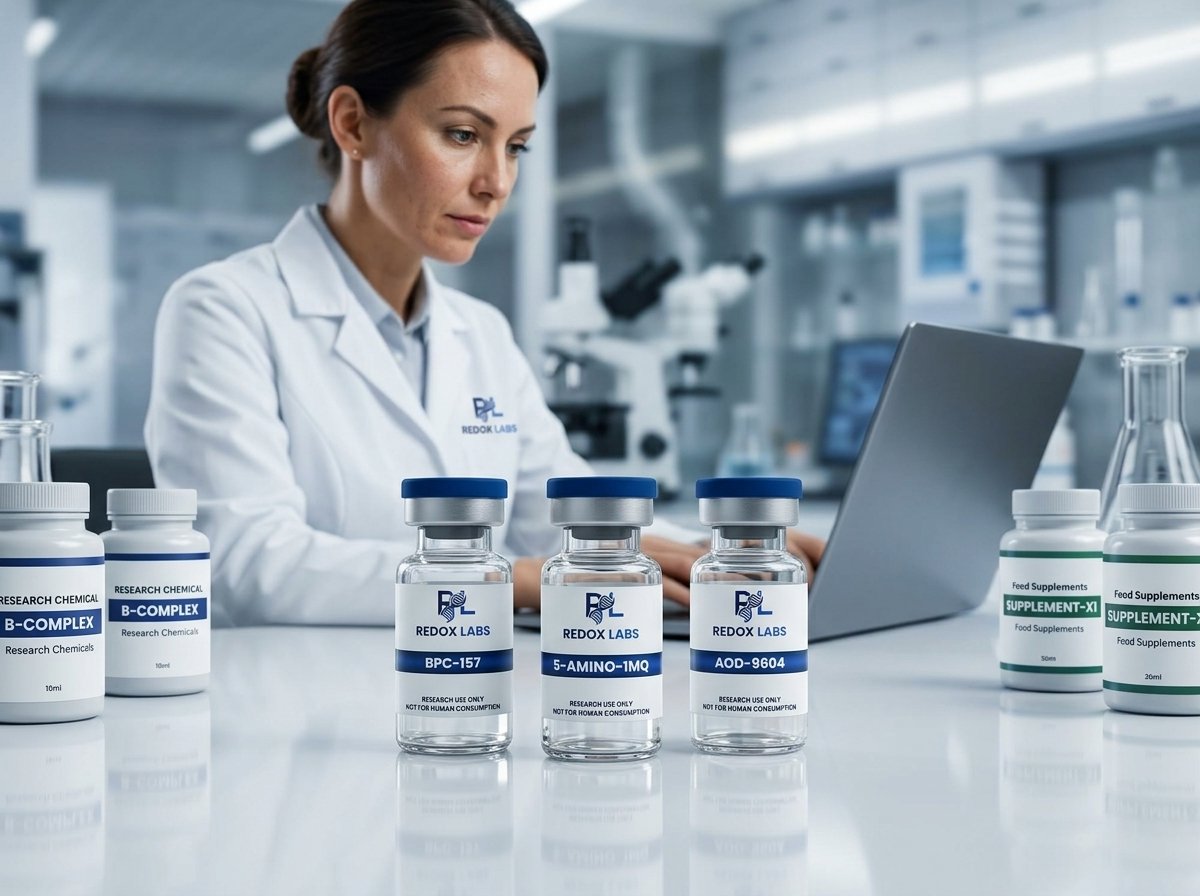
Although they may sometimes sound similar in marketing or product discussions, research chemicals and food supplements are fundamentally different in purpose, regulation, safety, and intended use.
Understanding this difference is important for safety, legal compliance, and proper usage.
1. Basic Definitions
Research Chemicals
Research chemicals are substances designed for laboratory research only. They are used to study biological or chemical effects in controlled environments and are not approved for human consumption.
Purpose: Scientific investigation
Setting: Laboratories only
Use: Experimental research
Food Supplements
Food supplements (also called dietary supplements) are products designed to support nutrition or health in humans.
They may include:
- Vitamins
- Minerals
- Herbal extracts
- Amino acids
- Protein powders
Purpose: Nutritional support
Setting: Personal daily use
Use: Oral consumption
2. Safety Differences
Research Chemicals
- Safety in humans is not established
- Toxicity, side effects, and long-term impact may be unknown
- Requires trained handling in labs
Key point: Not safe for self-use
Food Supplements
- Generally tested for human safety within limits
- Designed for regular consumption
- Must follow food safety standards (varies by country)
Key point: Designed for general public use
3. Legal and Regulatory Differences
Research Chemicals
- Sold strictly for research purposes
- Often labeled “Research Use Only (RUO)”
- Cannot be marketed for human consumption
- Sold strictly for research purposes
- Often labeled “Research Use Only (RUO)”
- Cannot be marketed for human consumption
5. Marketing and Misuse Risk
A key issue today is confusion caused by marketing.
Research chemicals should NEVER be:
- Marketed as weight loss products
- Promoted for human performance use
- Advertised as supplements or medicine
Food supplements should:
- Clearly show dosage instructions
- Be labeled for ingestion
- Follow approved ingredient lists
6.Real-World Example
Example:
A peptide labeled RUO is used in a laboratory to study cellular pathways.
Supplement Example:
A protein powder used daily to support muscle nutrition.
Same scientific world, completely different purpose.